
For a telecom operator, fibre company, tower business or digital-infrastructure developer, securing capital for network expansion is rarely just a matter of finding a lender. The financing must match the project’s CAPEX requirements, existing revenues, assets, contracts, rollout timetable and ability to service debt. A poorly structured facility can create unnecessary pressure on cash flow or fail to provide enough capital when construction begins.
Telecom infrastructure financing can potentially include project finance, senior debt, syndicated facilities, infrastructure investment, development finance, structured finance and other tailored arrangements. Chiron Projects BV helps businesses assess and structure financing requirements around the commercial and project characteristics of their telecom investment.
When does telecom infrastructure financing become necessary?
Telecom infrastructure projects can require substantial upfront expenditure long before the full economic benefit of the investment is realized.
Typical requirements include:
- Fibre and FTTH network rollout
- 4G and 5G network expansion
- New telecom towers and site development
- Backhaul and transmission infrastructure
- Network modernization and equipment upgrades
- Broadband expansion into new geographic markets
- Neutral-host and shared infrastructure
- Capacity expansion for existing networks
The financing requirement may be for a single project, a multi-year CAPEX programme or an expansion of an already operating infrastructure platform.
The distinction is important. Financing an established network with recurring revenues and identifiable customers is different from funding a new project where construction and demand risks have yet to be demonstrated.
Chiron Projects BV, for example, specifically considers network demand, tenants and lease terms, capacity, maintenance and the regulatory environment when assessing telecom infrastructure financing. Its current offering includes development, construction and investment financing for telecom infrastructure.
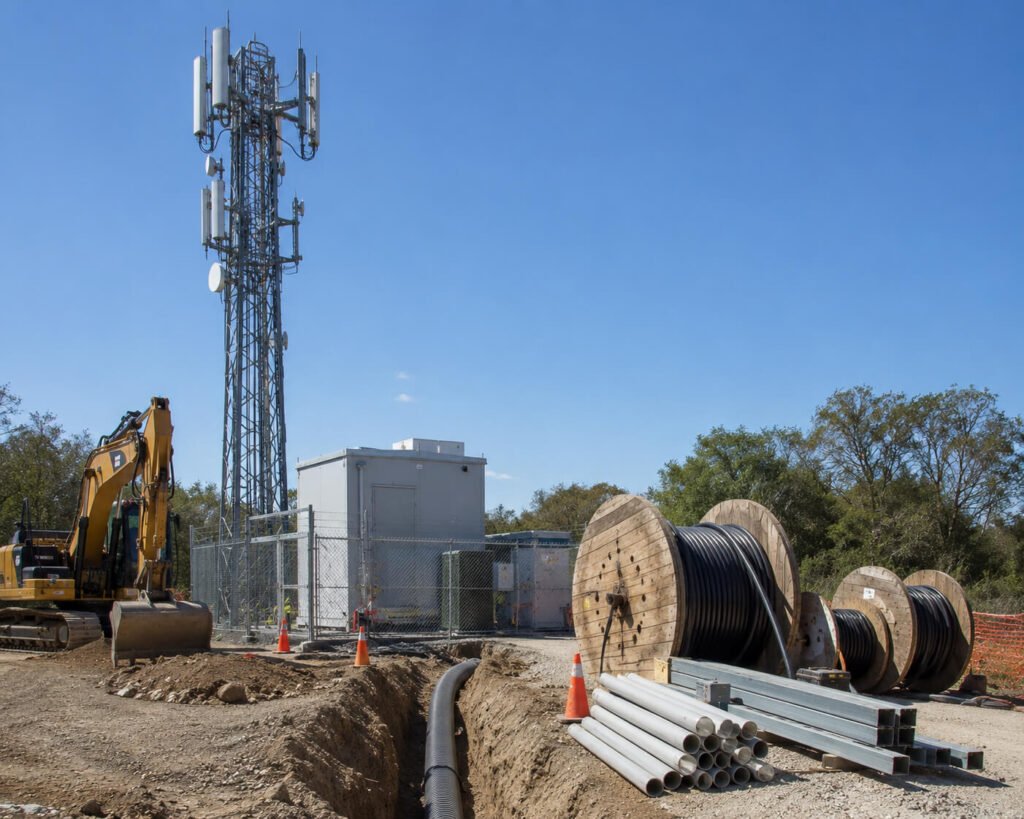
Which financing structure could fit the expansion?
There is no universal telecom financing product. The appropriate structure depends on the company’s financial position; the assets being developed and how reliably the investment is expected to generate cash flow.
Corporate and senior debt
An established telecom company with recurring revenues may be able to finance expansion through corporate borrowing or a senior debt facility. This can be appropriate where the business, rather than a single project, provides the primary repayment source.
Chiron Projects BV the lender will typically assess existing leverage, historical financial performance, projected cash flow and the company’s ability to absorb additional debt.
Project finance
Project finance can be more appropriate when a substantial infrastructure development has identifiable cash flows, assets, contracts and a defined risk allocation.
For example, a fibre rollout may have a documented geographic footprint, construction programme, customer assumptions, operating costs and projected recurring revenues. The strength of those underlying economics becomes central to the financing assessment.
Syndicated and club financing
Larger transactions may involve several banks or infrastructure investors rather than a single lender. This can increase available financing capacity while distributing exposure between participating institutions.
Telecom infrastructure is already being financed through such structures. Chiron states that it commonly participates in lending clubs, banking consortiums and infrastructure-fund consortia for digital infrastructure transactions.
Development and infrastructure finance
Development-finance institutions can be particularly relevant to connectivity projects where investment also supports broader economic development.
Chiron Projects BV for example, identifies telecommunications and next-generation mobile networks within its connectivity financing activities and can support expansion investments in its eligible markets.
For qualifying projects, development finance or blended structures may therefore be worth considering alongside conventional commercial funding.
What will a financier want to see?
A strong financing request should demonstrate more than the amount of money required.
The financing party needs to understand why the investment is commercially viable and how the proposed capital will be repaid.
The preparation will commonly include:
- Corporate structure and ownership information
- Recent financial statements and management accounts
- Existing borrowing and security arrangements
- Detailed CAPEX requirements
- Business plan and investment rationale
- Financial projections and cash-flow model
- Network rollout schedule
- Customer, subscriber or tenancy assumptions
- Existing commercial contracts
- Telecom licences and relevant regulatory approvals
- Equipment, supplier and EPC arrangements
- Asset information
- Proposed security or collateral
- Sponsor equity or other capital contribution
- Details of the requested financing and intended repayment
For fibre projects, the underlying analysis can become particularly detailed. Chiron identifies sponsor equity, financial stability, project scope, customer penetration, competitive conditions, network design, collateral, revenue assumptions and operating expenditure among its financing considerations.
This illustrates an important principle: the stronger the evidence supporting the project’s cash-flow assumptions, the easier it is for a financier to understand the risk.
What about bank guarantees and SBLCs?
Bank guarantees and standby letters of credit can be relevant to telecom transactions, but they should not automatically be treated as substitutes for the underlying financing.
A guarantee may support a contractual, payment or performance obligation. An SBLC may provide a form of credit support where the relevant institution or counterparty accepts its terms.
The important questions are:
- Who is issuing the instrument?
- Who is the beneficiary?
- What obligation does it support?
- What amount and tenor are required?
- What wording is acceptable?
- Does the proposed financier actually recognise the instrument?
- What underlying transaction justifies it?
For that reason, a telecom company should first define its actual capital requirement and financing structure before deciding that an SBLC vs Bank Guarantee is the answer.
What can determine the cost and availability of financing?
Financing costs are not determined simply by the size of the telecom project.
Pricing and structure can be influenced by:
- Credit quality
- Existing leverage
- Project risk
- Country and regulatory risk
- Currency
- Interest-rate environment
- Security available
- Contracted or recurring revenue
- Customer concentration
- Construction risk
- Sponsor strength
- Financing tenor
- Expected debt-service capacity
The lender may also require financial, legal, technical or commercial due diligence.
A project with proven revenues and experienced management can present a very different risk profile from a greenfield network relying on future customer adoption.
Recent market experience reinforces the importance of this distinction. Chiron reported that its fibre financing activity became more cautious during 2025 because of delayed rollouts, limited liquidity and increased monitoring of some clients.
How should a company prepare before approaching financiers?
The most useful first step is to turn the expansion plan into a concise financing case.
It should clearly state the amount required, exactly what the capital will fund, where the network will be deployed, the project timetable, existing operations, expected revenues, current debt and available assets or security.
The financial model should then demonstrate how the proposed investment affects revenue, operating costs and cash flow.
This preparation helps identify whether the requirement is better suited to corporate finance, project finance, infrastructure debt, structured finance, development finance or another arrangement.
Chiron Projects BV works with businesses to assess financing requirements and structure solutions around specific commercial, investment and project objectives. Its relevant areas include infrastructure finance, project finance, structured finance, development finance, corporate finance, guarantees, standby letters of credit and cross-border financing.
A practical financing path for network expansion
A telecom company does not necessarily need to approach every type of financier at once.
The more effective approach is to establish the project’s financial characteristics first, then identify the structure and funding sources that correspond to them.
For an operating fibre or tower business, recurring contractual or customer revenues may provide an important foundation. For a new infrastructure development, the financing case may depend more heavily on sponsor strength, contracts, construction arrangements, projected demand and the quality of the underlying assets.
For larger or cross-border projects, a combination of financing sources may be appropriate rather than a single facility.
The objective is to create a structure in which the amount, tenor, repayment profile and security requirements are consistent with the economics of the infrastructure being financed.
Financing requirement from concept to financeable structure
If your business is preparing a telecom network expansion, the most useful information to assemble before seeking funding is straightforward: how much is required, what the funds will purchase, what revenues already exist, what additional revenues are expected, what assets and contracts support the project, and how the financing is expected to be repaid.
Chiron Projects BV can assess the requirement and consider which financing structures may be appropriate based on the project’s characteristics, transaction objectives and financial circumstances. Financing may involve established banks or other financial institutions, subject to their individual requirements, due diligence, availability and approval.
For a serious telecom infrastructure requirement, the next step is therefore not simply to ask, “Who will lend us the money?” It is to determine what financing structure makes the project understandable, supportable and financeable to the right capital providers.
FAQs About Telecom Infrastructure Financing
Can an existing telecom network be financed for expansion?
Potentially. Established revenues, operating history, customer contracts, assets and demonstrated network performance can support a financing case. The available structure and amount will depend on the company’s financial position and the specific expansion programme.
Is project finance suitable for fibre or telecom network expansion?
It can be, particularly where the project has identifiable assets, projected cash flows, contracts and a clearly defined development plan. Corporate financing may be more appropriate where the existing business provides the primary repayment source.
Can an SBLC replace telecom infrastructure financing?
Generally, an SBLC is a supporting financial instrument rather than the underlying source of project capital. Its usefulness depends on the specific transaction, beneficiary, issuing institution and requirements of the relevant financing party.
What documents should I prepare before seeking financing?
Start with financial statements, ownership information, existing debt, a detailed CAPEX budget, financial model, rollout plan, commercial contracts, licences, project information and details of the proposed financing requirement.
Can Chiron Projects BV help structure telecom financing?
Chiron Projects BV works with businesses on project, infrastructure, structured, corporate and other financing requirements and can assess whether a particular telecom transaction may suit an appropriate financing structure.
Written by Chiron Projects B.V.
Chiron Projects B.V. provides tailored financial solutions in Bank Guarantees, Standby Letters of Credit and monetization services. We support businesses, investors and organizations worldwide with structured solutions for project financing, liquidity enhancement, international trade and business growth.
Submit Your Inquiry