
A Chinese manufacturer opening a factory in Europe, an infrastructure contractor taking on an overseas project, a technology group acquiring a foreign business, or an exporter supplying equipment abroad can face the same immediate problem: the expansion may be commercially attractive, but the capital structure has to work across two or more jurisdictions.
The choice is not simply between a loan and equity. Depending on the transaction, overseas financing for Chinese companies may involve project finance, acquisition finance, export credit, working capital, structured finance, guarantees or support from the Chinese parent. The right combination can determine whether an overseas opportunity is financeable without placing unnecessary pressure on the parent company.
Start with the transaction, not the financial product
The most useful question is not “Which loan can I get?”
It is:
What exactly is the Chinese company financing overseas?
That distinction matters because an overseas acquisition has a different repayment source from a new manufacturing plant, while an export contract may require an entirely different structure.
Recent market activity confirms that overseas expansion remains substantial. EY reports that China’s outward direct investment reached US$86.5 billion in the first half of 2026, up 8.1% year on year. Announced overseas M&A reached US$21.4 billion, while newly signed Chinese overseas EPC contracts reached US$125.6 billion.
For a business already preparing a transaction, that creates several potential financing routes.
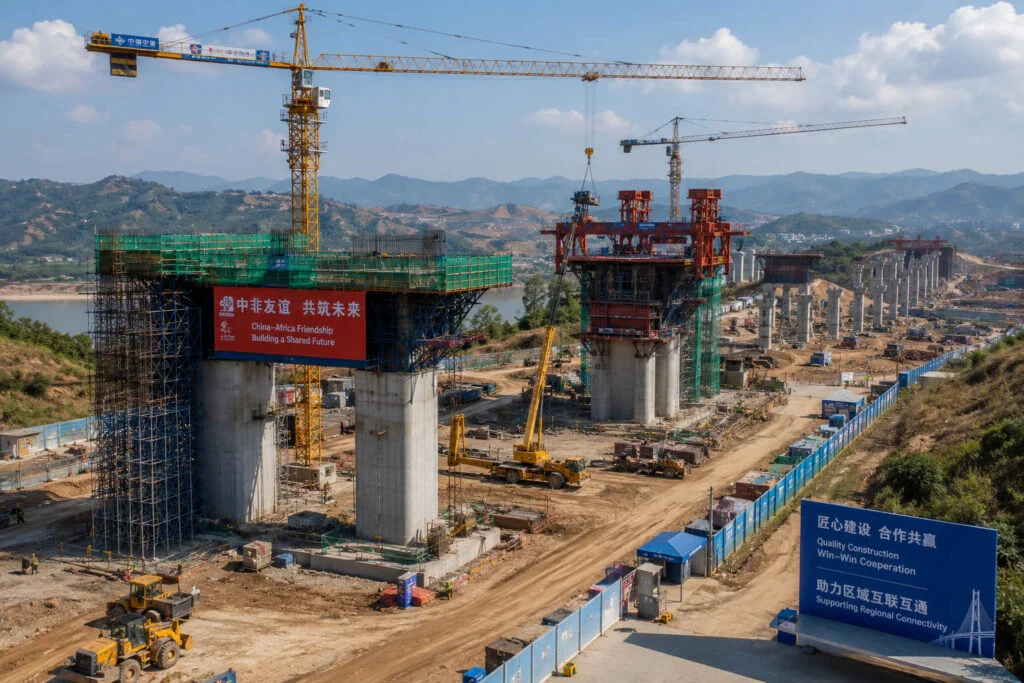
Six situations that lead to very different financing structures
1. Establishing or expanding an overseas subsidiary
If the Chinese parent is establishing a foreign subsidiary, financing may be required for property, equipment, staff, inventory, initial operating costs and other investment expenditure.
An overseas investment loan or corporate financing structure may be appropriate, particularly where the parent has an established financial record and the overseas business is part of a broader group strategy.
Chiron Projects BV for example, specifically describes overseas investment loans for Chinese enterprises and their overseas subsidiaries, including RMB and foreign-currency financing.
The key issue is therefore not simply whether the subsidiary exists. Lenders will consider the strength of the wider group, the purpose of the investment, projected cash flows, jurisdiction and available security.
2. Building a factory, energy facility or infrastructure project
A capital-intensive project can sometimes be better suited to project finance than a conventional corporate loan.
Project finance places greater emphasis on the economics and future cash flow of the project itself. Chiron describes limited-recourse project finance as an alternative for Chinese sponsors undertaking overseas infrastructure projects, particularly where conventional corporate guarantees may not provide the preferred solution.
This can be particularly relevant where there is a defined project vehicle, long-term commercial contracts, identifiable revenues and a clear construction and operating plan.
Chiron Projects BV the lender will normally want much more than a corporate balance sheet. Technical, legal, commercial, contractual and financial due diligence can all become important.
3. Acquiring an overseas business
When expansion means buying an existing company, acquisition finance may be considered alongside the buyer’s equity contribution.
The financing assessment can include the target’s historical financial performance, projected cash flow, assets, existing debt, purchase price, transaction structure and the expected contribution of the acquired business to debt repayment.
A strong acquisition case should therefore demonstrate more than the strategic reason for buying the company. It needs to show how the transaction will be funded and how the resulting debt can be serviced.
For larger transactions, structured or syndicated financing may also become relevant.
4. Exporting Chinese equipment, technology or services
Not every overseas expansion requires the Chinese company to finance an overseas subsidiary.
A Chinese manufacturer might instead have won a large contract to supply machinery, industrial systems or technology to a foreign customer.
That creates an export finance requirement.
Chiron Projects BV current China financing offering includes project and export credit financing for large Chinese exports, overseas EPC contracts and overseas investment projects.
Chiron Projects BV also provides export seller credit and export buyer credit, illustrating the distinction between financing the Chinese exporter and supporting financing for an overseas buyer.
This distinction can materially change the financing structure, repayment source and documentation required.
5. The overseas subsidiary is new and has limited local credit history
This is one of the most practical financing obstacles.
A newly incorporated overseas company may have an attractive business plan but little or no local borrowing history. Its Chinese parent, however, may have considerably greater assets, revenue and operating history.
In appropriate circumstances, bank guarantees, parent support or SBLCs can form part of a financing structure supporting an overseas borrowing arrangement.
That does not mean a guarantee automatically creates financing. The issuing institution, lender, jurisdiction, underlying transaction, parent-company strength and proposed security all matter.
The structure also needs to be reviewed for applicable Chinese and host-country requirements before execution.
6. The overseas operation needs working capital after launch
Expansion does not end when the investment is completed.
A foreign subsidiary may subsequently need funding for inventory, receivables, supplier payments, imports, payroll, mobilization costs or contract execution.
This is where working capital finance and trade finance can become more relevant than the original investment facility.
A company should therefore consider the financing requirement in two stages: the capital required to establish or acquire the overseas operation, and the liquidity needed to operate it once trading begins.
What can actually be financed?
A useful preliminary assessment should separate capital expenditure from operating requirements.
| Requirement | Financing that may be relevant |
| Overseas acquisition | Acquisition or structured finance |
| New factory | Project, corporate, construction or equipment finance |
| Major infrastructure | Project finance |
| Chinese equipment export | Export or trade finance |
| New overseas subsidiary | Corporate or overseas investment financing |
| Inventory and receivables | Working capital or trade finance |
| Contractual security | Bank guarantee or SBLC |
| Large cross-border transaction | Structured or syndicated financing |
These categories are not mutually exclusive. A substantial overseas project may combine several sources of capital rather than rely on one facility.
What will a financing provider want to see?
The earlier the financing structure is considered, the easier it is to identify gaps.
A financing request will normally need a clear description of the transaction and supporting evidence. Depending on the structure, this can include:
- Chinese parent-company financial statements;
- ownership and group structure;
- overseas subsidiary information;
- business plan and investment rationale;
- project feasibility information;
- acquisition documents, where applicable;
- EPC, supply, offtake or customer contracts;
- projected revenues and cash flows;
- existing debt and banking facilities;
- asset and collateral information;
- requested financing amount and currency;
- proposed tenor and repayment profile;
- information about the overseas jurisdiction; and
- details of guarantees, shareholder support or other credit enhancement.
For project finance, the quality of contracts and projected project cash flow can be particularly important. For acquisition finance, the target’s financial performance and purchase structure become central. For export finance, the underlying export contract and buyer risk may carry greater weight.
The financing request should therefore be built around the transaction rather than presented as a generic request for capital.
The cross-border issues can change the answer
A financing structure that appears straightforward domestically can become considerably more complex when the borrower, parent, assets, customers and lender are located in different countries.
Foreign-exchange exposure is one consideration. The borrowing currency should be assessed against the currency in which the project or overseas business generates revenue.
Country and political risk can also affect financing availability, particularly for infrastructure and resource projects.
There may additionally be Chinese outbound-investment, foreign-exchange and cross-border financing requirements alongside regulations in the destination country. China’s State Administration of Foreign Exchange has been continuing measures aimed at facilitating cross-border investment and financing, but transaction-specific regulatory requirements still need to be checked.
That makes early transaction structuring important.
How to approach the financing decision
Before approaching lenders, the Chinese company should be able to answer five practical questions:
What are we financing?
Acquisition, construction, equipment, export, subsidiary establishment or ongoing working capital?
Who will borrow?
The Chinese parent, an overseas subsidiary, a project company or another transaction entity?
What will repay the financing?
Parent-company cash flow, project revenues, export receivables, acquired-business cash flow or another identified source?
What credit support is available?
Assets, contracts, parent support, guarantees, SBLCs, equity or other security?
How much capital is actually required?
Separating the initial investment from future working-capital needs prevents an otherwise viable transaction from being underfunded.
Where Chiron Projects BV can fit
Chiron Projects BV works with clients to identify and structure financing according to the transaction rather than forcing every requirement into one product.
For a Chinese company expanding overseas, that can include cross-border financing, project finance, export credit financing, acquisition finance, structured finance, trade finance, working capital facilities and, where appropriate, bank guarantees or SBLCs.
Financing will potentially be arranged through established banking and financial institutions, including institutions such as HSBC or Deutsche Bank, depending on the transaction, jurisdiction, requirements, availability and approval of the relevant institution.
The useful starting point is therefore not simply requesting a particular financial product. It is presenting the transaction clearly enough for the appropriate financing structure to be assessed.
Prepare the financing case before the opportunity becomes urgent
A Chinese company that waits until an acquisition closing date, overseas construction milestone or major export contract is imminent may leave less time to resolve structural issues.
A stronger approach is to prepare the financing case while the transaction is being developed.
Set out the investment amount, purpose of funds, proposed borrower, jurisdiction, ownership structure, contracts, projected cash flow, available security and expected repayment source. That gives a financing partner the information needed to determine which structures are realistic and whether more than one financing instrument should be considered.
For companies with a defined overseas transaction, Chiron Projects BV can review the requirement and help develop a financing structure aligned with the project, investment or commercial objective.
The next step is to turn the overseas expansion plan into a financeable transaction. Share the proposed investment or project, required financing amount, destination country, intended use of funds and available corporate or project support with Chiron Projects BV for an initial assessment of the appropriate financing route.
FAQs About Financing Options for Chinese Companies
1. Can a Chinese company finance an overseas subsidiary?
Potentially, yes. Financing can be structured around the Chinese parent, the overseas subsidiary or the underlying project, depending on the transaction, jurisdiction, financial strength and applicable requirements.
2. Can an overseas subsidiary borrow if it has little credit history?
Potentially. Parent support, guarantees, SBLCs, project assets, contracts or other credit enhancements may help support a financing structure, subject to lender and regulatory requirements.
3. Is project finance better than a corporate loan for overseas expansion?
Neither is automatically better. Project finance can be appropriate where a project has identifiable assets, contracts and future cash flows, while corporate finance may be more suitable for general expansion supported by the parent company’s balance sheet.
4. Can export finance be used when a Chinese company supplies equipment overseas?
Yes. Export financing can potentially support qualifying equipment, technology, goods or services sold to overseas customers. The appropriate structure depends on the export contract, buyer, country and financing requirements.
5. What should I provide when requesting overseas financing?
Start with the transaction amount, purpose of funds, destination country, borrower structure, company financial information, contracts, projected cash flow, available security and proposed repayment source. More detailed documents will depend on the financing structure.
Written by Chiron Projects B.V.
Chiron Projects B.V. provides tailored financial solutions in Bank Guarantees, Standby Letters of Credit and monetization services. We support businesses, investors, and organizations worldwide with structured solutions for project financing, liquidity enhancement, international trade and business growth.
Submit Your Inquiry