
An EPC contractor can win a substantial international contract and still face a serious funding problem before the first meaningful project payment arrives. Equipment may need to be ordered, suppliers may require payment security, employees and subcontractors must be paid, and the project owner may require performance or advance payment guarantees before mobilisation. For an established contractor with a signed or near-final contract, the question is therefore not simply whether financing is available. The real question is how to structure several financing facilities so that guarantees, procurement, working capital and project costs work together without creating a damaging liquidity gap.
For companies facing this situation, Chiron Projects BV can assess the underlying contract and help determine an appropriate financing structure, including project finance, trade finance, working capital, Bank Guarantees and Standby Letters of Credit.
Why One Financing Facility May Not Be Enough
An EPC contract creates several different financial requirements at different stages.
The contractor may need guarantee capacity when the contract is signed, liquidity for mobilisation, financing for equipment and materials during procurement, and additional working capital while waiting for certified milestone payments.
These requirements should not automatically be treated as one large loan.
A better approach is to examine the project’s cash-flow cycle and match each requirement with the most suitable financial instrument.
For example, long-term project costs may require project finance, imported equipment may be supported through trade finance, contractual security may require a Bank Guarantee or Standby Letter of Credit, while payroll, subcontractors, mobilisation and temporary cash-flow gaps may require working capital.
Chiron Projects BV structures financing around this underlying requirement rather than assuming that one financial product is appropriate for every EPC transaction.
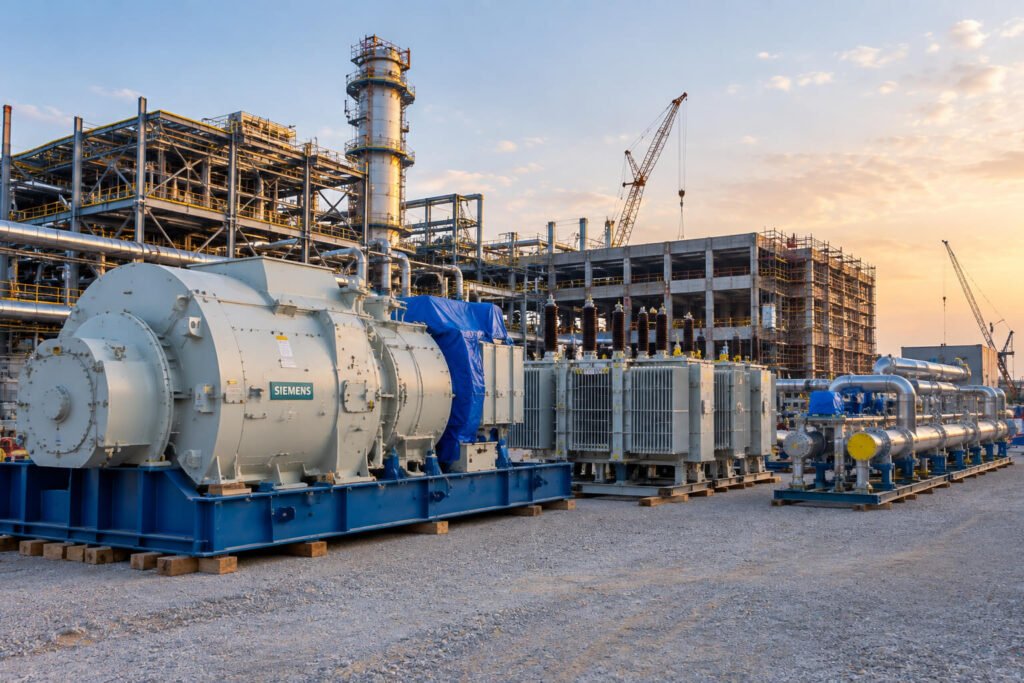
The Four Main Funding Requirements in an EPC Project
1. Project Finance
Large infrastructure, energy, industrial and construction projects can require financing beyond the contractor’s ordinary operating liquidity.
Project finance may be appropriate where the size, economics, contractual structure and expected project cash flows justify a dedicated financing structure.
The assessment normally considers the project itself, the contractual arrangements, payment mechanism, project economics, security package, counterparties and the ability of the project to generate sufficient cash flow.
Chiron Projects BV can assess project financing requirements for viable international projects and commercial contracts and determine whether a structured project-finance approach may be suitable.
2. Trade Finance for Procurement
An EPC contractor can be commercially profitable while still being unable to finance the procurement cycle.
Equipment manufacturers and suppliers may require deposits, documentary payment arrangements or payment security well before the contractor receives its next project milestone.
Trade finance can help bridge this timing difference.
Depending on the transaction, financing may support the purchase or import of equipment, machinery, materials and other project-related goods. The structure can be coordinated with the EPC contract and expected payment schedule.
For companies with international procurement requirements, Chiron Projects BV provides trade finance solutions designed around specific commercial transactions.
The important consideration is not simply the value of the purchase order. The financier needs to understand the supplier, buyer, payment terms, shipment or delivery arrangements, project contract and expected source of repayment.
3. Working Capital
Working capital is often where an EPC project becomes difficult in practice.
The contractor may need to fund engineering, mobilisation, labour, subcontractors, logistics, insurance, equipment deposits and site expenses before receiving sufficient cash from the project owner.
The relevant figure is therefore not necessarily the total contract value. It is the peak funding requirement during execution.
A €50 million EPC contract might require considerably less than €50 million of external funding, but it could still require several million euros of liquidity at the point where expenditure reaches its highest level.
Chiron Projects BV provides working capital solutions that can be considered alongside trade finance, guarantees and project financing where the transaction supports such a structure.
4. Bank Guarantees Can Be Part of the Financing Structure
Many EPC contracts require financial security before work can begin.
Depending on the contract, this may include a bid or tender guarantee, performance guarantee, advance payment guarantee, payment guarantee or another form of contractual security.
A Bank Guarantee does not normally provide the contractor with unrestricted cash. Its purpose is to provide the beneficiary with financial protection if specified contractual obligations are not fulfilled.
However, the guarantee can be commercially critical.
Without the required guarantee, an otherwise viable EPC contract may not proceed to mobilisation.
Chiron Projects BV can assess the contractual requirement and arrange Bank Guarantee solutions through appropriate financial channels, subject to transaction requirements, due diligence, documentation and final approval.
The guarantee requirement should also be considered alongside the contractor’s liquidity. If issuing the guarantee requires substantial collateral or consumes existing banking capacity, additional financing may be required to preserve cash for project execution.
How a Standby Letter of Credit Can Support an EPC Project
A Standby Letter of Credit can provide financial assurance for certain contractual, payment or financing obligations where the structure is acceptable to the relevant parties.
It can potentially support an EPC transaction by strengthening the contractor’s financial position, supporting contractual commitments or forming part of a broader financing or credit-enhancement structure.
However, a Standby Letter of Credit should not be presented as automatic project funding. Its usefulness depends on the transaction, issuing institution, wording, beneficiary, amount, validity and the requirements of the party relying on it.
Chiron Projects BV provides Standby Letter of Credit solutions for eligible international trade, project-finance and contractual requirements.
The objective is to determine whether the instrument actually solves a requirement within the project rather than arranging an instrument simply because it is available.
Combining Guarantees with Working Capital
This is one of the most important considerations for an EPC contractor.
Suppose an employer requires a €5 million performance guarantee. The contractor may also require €4 million for mobilisation, procurement and early-stage construction.
The contractor therefore has two different financing requirements:
- €5 million of contractual financial security; and
- €4 million of project liquidity.
Treating these as completely separate matters can produce an inefficient financing structure.
The guarantee may consume existing credit capacity or require collateral, while the working-capital facility needs to provide actual liquidity for project expenditure.
A coordinated structure can instead consider both requirements alongside the EPC contract, payment schedule and expected cash flows.
This is particularly relevant for established contractors whose existing facilities are insufficient for a new large project.
Can a Bank Guarantee or Standby Letter of Credit Support Project Financing?
Potentially, yes, but the role needs to be clearly defined.
A Bank Guarantee or Standby Letter of Credit may provide credit enhancement, contractual security or support for a specific obligation within a financing structure. In some transactions, an acceptable instrument can strengthen the overall financing package.
It does not, by itself, guarantee that a project will receive funding.
The financing provider will still need to assess the project, contractor, contract, counterparties, repayment source, jurisdiction, documentation, security and overall transaction risk.
For this reason, Chiron Projects BV approaches project financing as a broader structuring exercise rather than treating a financial instrument as a substitute for project underwriting.
Non-Recourse Monetization of Bank Guarantees and Standby Letters of Credit
An existing Bank Guarantee or Standby Letter of Credit may, in qualifying circumstances, create another potential source of liquidity through non-recourse monetization.
Under an appropriate monetization structure, the financial instrument can potentially be used to obtain funding without requiring the contractor to sell the underlying instrument.
This can be relevant where a company has a qualifying Bank Guarantee or Standby Letter of Credit but requires additional liquidity for project execution, investment, expansion or working capital.
Chiron Projects BV provides non-recourse monetization solutions for qualifying Bank Guarantees and Standby Letters of Credit.
The distinction between genuine structured monetization and unrealistic promises of immediate funding is important. Monetization is transaction-specific and depends on the instrument, issuing institution, beneficiary, terms, validity, documentation, compliance requirements and the financing institution’s approval.
It should therefore be assessed as part of the complete financing structure rather than treated as guaranteed cash conversion.
A Practical EPC Financing Structure
Consider an established contractor with a €60 million EPC contract.
The project owner requires a €6 million performance guarantee and provides milestone payments based on certified project progress.
The contractor expects its highest early-stage cash requirement to be approximately €7 million, primarily for equipment deposits, mobilisation, subcontractors and project execution.
A suitable structure could potentially combine:
- a Bank Guarantee facility for the performance requirement;
- trade finance for qualifying equipment and procurement;
- working-capital financing for mobilisation and operational expenditure;
- project financing where the project’s size and structure justify it; and
- receivables or other liquidity solutions where appropriate for certified project payments.
The precise structure depends on the contract and the contractor’s financial position. The objective is to ensure that financing is available when the project requires it, rather than simply obtaining the largest possible facility.
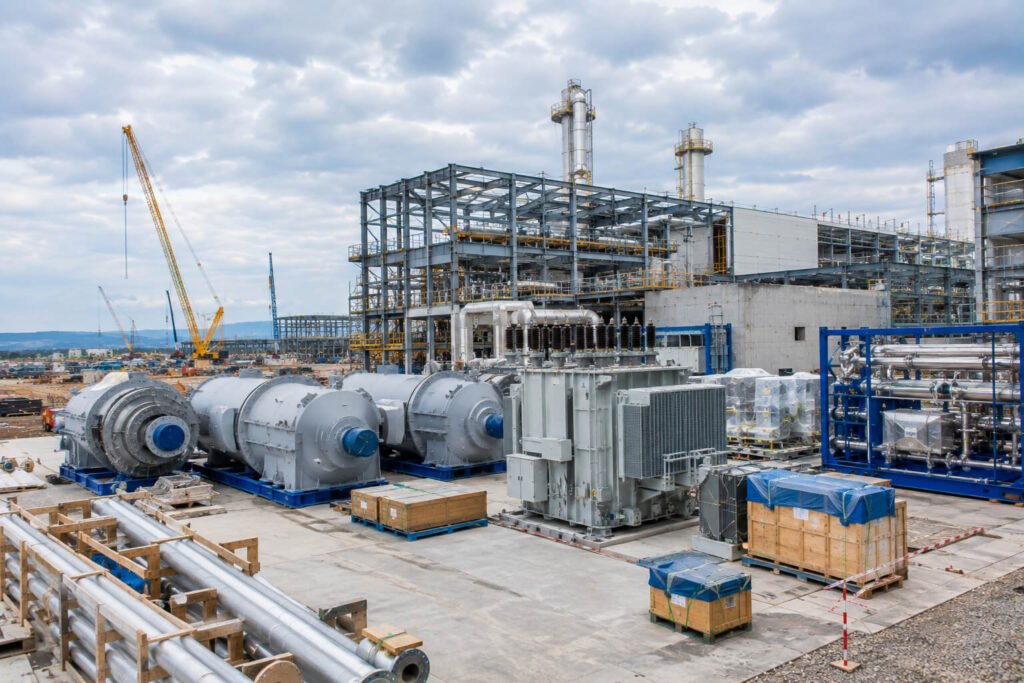
What Chiron Projects BV Needs to Assess an EPC Financing Requirement
For a meaningful assessment, an established contractor should be prepared to provide:
- signed or near-final EPC contract;
- contract value and currency;
- project location;
- project owner and counterparties;
- payment and milestone schedule;
- required guarantees;
- guarantee amounts and validity;
- advance-payment terms;
- procurement requirements;
- estimated peak working-capital requirement;
- project duration;
- existing financing facilities;
- recent financial information; and
- details of any existing Bank Guarantee or Standby Letter of Credit.
This allows Chiron Projects BV to assess the financing requirement around the actual transaction.
Where appropriate, financing may be arranged through established banking and international financial institutions. Chiron Projects BV’s role is to help structure and coordinate the requirement with suitable financing channels, subject to due diligence, compliance, transaction suitability and final approval.
Why Chiron Projects BV Is Relevant to an EPC Contractor
An EPC contractor rarely has only one financing problem.
The contractor may need a guarantee to satisfy the employer, trade finance to purchase equipment, working capital to execute the project and additional project financing to support the broader capital requirement.
Chiron Projects BV brings these requirements together within one financing assessment.
Based in The Hague, Netherlands, and registered with the Dutch Chamber of Commerce, Chiron Projects BV provides structured financing solutions for businesses and projects internationally. Its capabilities include trade finance, Bank Guarantees, Standby Letters of Credit, project finance, working capital solutions and non-recourse monetization of qualifying financial instruments.
The value is in understanding how these components interact. A guarantee that consumes liquidity, a supplier payment that occurs before a milestone receipt, or a long certification period can materially change the amount and type of financing a project needs.
Ready to Structure the Financing Behind Your EPC Contract?
If your company has already secured an EPC contract, the most productive next step is to assess the complete funding requirement, not just request a single financial product.
Chiron Projects BV can review the contract, guarantee requirements, procurement schedule, payment milestones and expected liquidity requirements to determine what combination of financing may be appropriate.
Request an EPC financing assessmentand provide the contract value, project location, payment structure, guarantee requirements and estimated funding gap. The more complete the transaction information, the more meaningful the initial financing assessment can be.
FAQs About EPC Contractor Financing
1. What is EPC Contractor Financing?
EPC Contractor Financing is a structured approach to funding the different financial requirements of an engineering, procurement and construction project. Depending on the transaction, it can combine project finance, trade finance, working capital, Bank Guarantees, Standby Letters of Credit and other appropriate facilities.
2. Can an EPC contractor use a Bank Guarantee for project financing?
A Bank Guarantee can support a contractual or financial obligation within a broader project-financing structure, but it is not automatically project capital. Its usefulness depends on the project, beneficiary, issuing institution, financing structure and requirements of the relevant financing party.
3. Can a Standby Letter of Credit help an EPC contractor preserve working capital?
Potentially. A suitable Standby Letter of Credit may provide contractual or financial assurance without requiring the contractor to use the same amount of cash for the underlying obligation. Whether it can preserve working capital depends on the transaction and the requirements of the relevant parties.
4. Can an existing Bank Guarantee or Standby Letter of Credit be monetized?
In qualifying transactions, an existing Bank Guarantee or Standby Letter of Credit may potentially be considered for non-recourse monetization. The instrument, issuing institution, beneficiary, terms, validity and compliance requirements must be assessed before any financing structure can be considered.
5. What should an EPC contractor provide when seeking financing?
The contractor should normally provide the EPC contract or near-final agreement, project details, payment schedule, guarantee requirements, procurement requirements, expected funding requirement, company information and relevant financial documentation. Existing guarantees or Standby Letters of Credit should also be disclosed where applicable.
Written by Chiron Projects B.V.
Chiron Projects B.V. provides tailored financial solutions in Bank Guarantees, Standby Letters of Credit and monetization services. We support businesses, investors, and organizations worldwide with structured solutions for project financing, liquidity enhancement, international trade and business growth.
Submit Your Inquiry